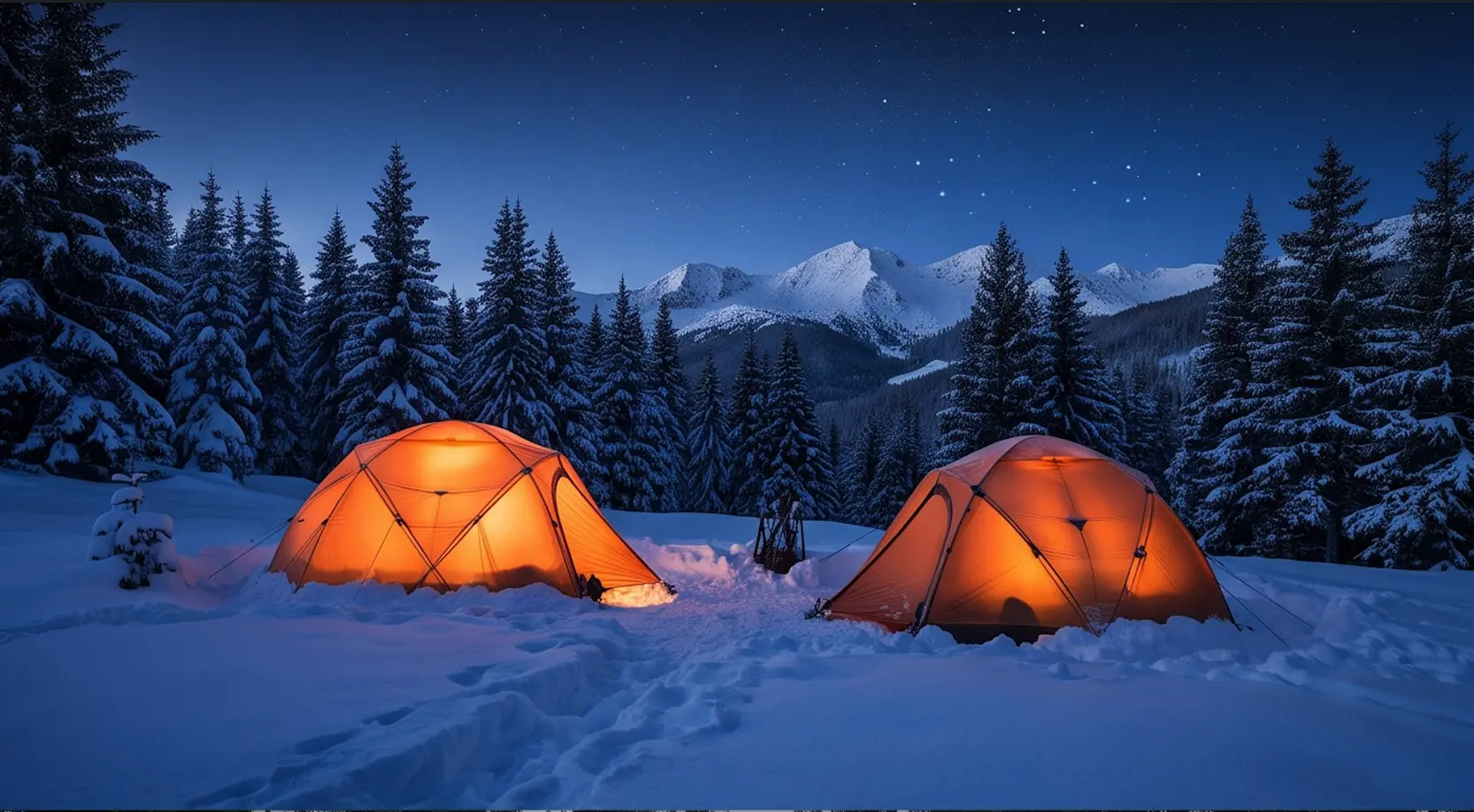
There is a unique, crystalline magic to camping in the cold. The crowds thin out, the landscape transforms under a blanket of frost or snow, and the silence of a winter forest is profoundly peaceful. However, that magic can quickly turn into misery if you are not properly prepared. When night temperatures drop to zero, maintaining your core body temperature becomes a matter of safety, not just comfort. Here are the professional secrets to staying incredibly warm in a tent during freezing nights.
1. The Foundation: Ground Insulation is Crucial
A common mistake novice cold-weather campers make is investing entirely in a massive sleeping bag while neglecting what goes underneath them. Through a process called conductive heat loss, the frozen ground will siphon your body heat away much faster than the surrounding cold air.
You need a high-quality sleeping pad with an appropriate R-value (a measure of thermal resistance). For sub-zero temperatures, look for an R-value of 4.0 or higher. A popular professional technique is to stack pads: place a closed-cell foam pad directly on the tent floor, and put an inflatable insulated pad on top. This creates an impenetrable barrier against the frozen earth.
"The ground is a heat thief. You can have a sleeping bag rated for Everest, but without proper ground insulation, you will still freeze from the bottom up."
2. The Science of the Sleeping Bag
Your sleeping bag does not generate heat; it traps the heat your body produces. Therefore, fit is just as important as the temperature rating. A mummy-style bag is non-negotiable for extreme cold because it contours to your body, eliminating dead air space that your body would otherwise have to work to heat up.
Understanding Temperature Ratings
Always look at the "Comfort Rating" rather than the "Extreme Rating" on a sleeping bag. If the overnight low is expected to be 0°C, bring a bag rated for -10°C. Having a buffer ensures that unexpected drops in temperature won't leave you shivering. Additionally, fluff your down sleeping bag vigorously as soon as you set up your tent to allow the insulation to loft and trap air effectively.
3. Smart Layering Strategies
What you wear to bed dictates how well your sleeping bag functions. Avoid cotton entirely, as it traps moisture (sweat) against your skin, chilling you rapidly. Instead, rely on merino wool or high-quality synthetic base layers.
Protecting Your Extremities
Your body prioritizes keeping your vital organs warm, restricting blood flow to your extremities. Combat this by wearing thick, dry wool socks dedicated specifically for sleeping. A significant amount of heat escapes from an exposed head, so wearing a warm fleece or wool beanie is mandatory. A neck gaiter can also prevent drafts from entering the collar of your sleeping bag.
4. The Hot Water Bottle Hack
This is perhaps the greatest wilderness hack for cold nights. Boil water right before you plan to sleep and pour it into a sturdy, leak-proof hard plastic bottle (like a Nalgene). Ensure the lid is screwed on incredibly tight. Place this hot bottle at the foot of your sleeping bag. It acts as a radiator, keeping your feet toasty and radiating warmth throughout the bag for hours.
5. Fueling the Furnace
Your body needs calories to generate heat. Eating a high-fat, high-protein snack right before bed—such as a handful of nuts, cheese, or a piece of chocolate—gives your metabolism slow-burning fuel to keep your internal furnace running all night long. Hydration is equally important, as a well-hydrated body regulates temperature much more efficiently.
By treating your tent setup, insulation, and body fuel as an integrated system, cold-weather camping transforms from an endurance test into a cozy, exhilarating adventure.